

NEWS
“Power Alone Isn’t Enough — Tackle Balance for Shore-Based Pelagic Fishing”
Hello everyone, this is the YAMAGA Blanks PR team.
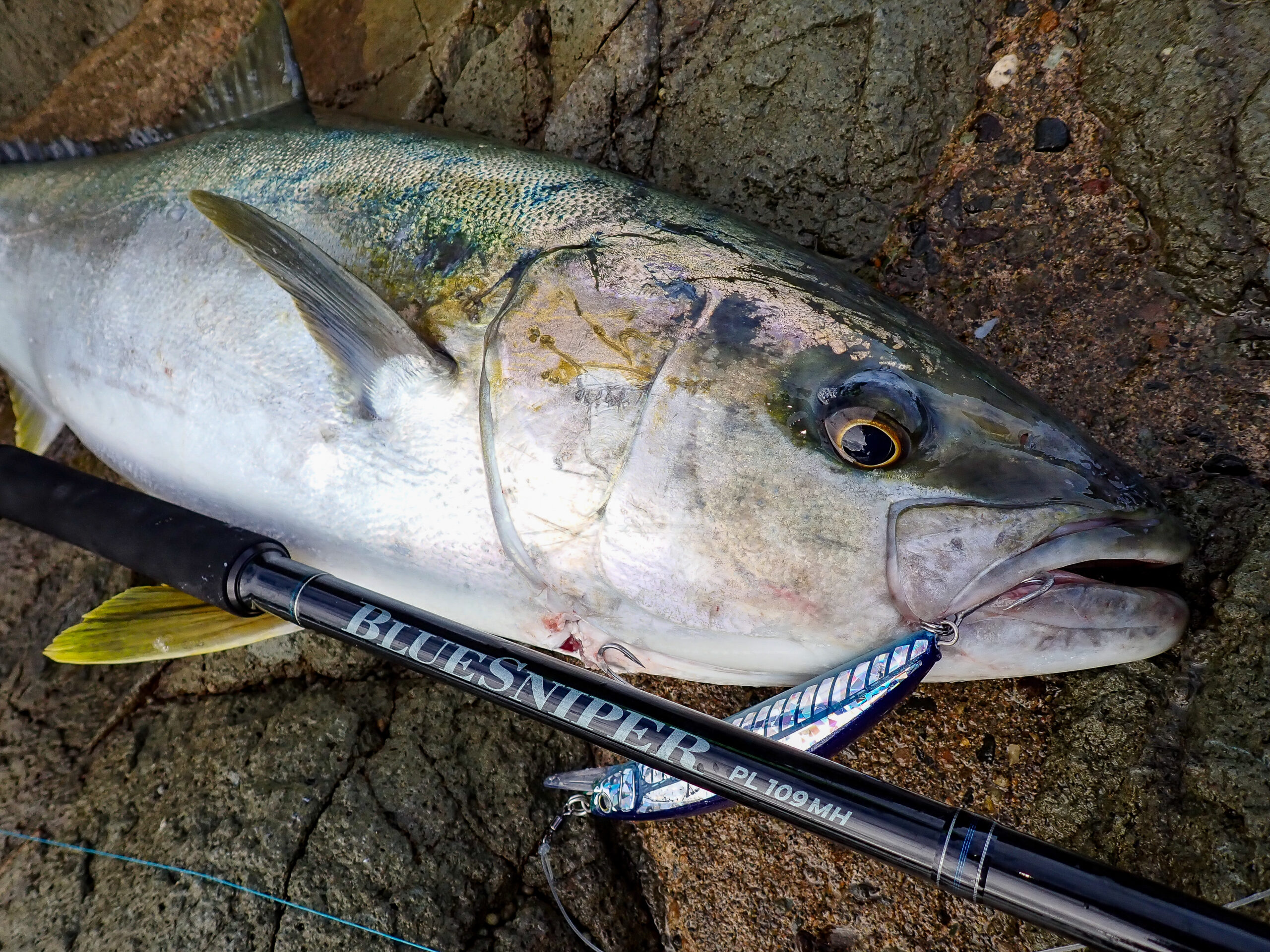
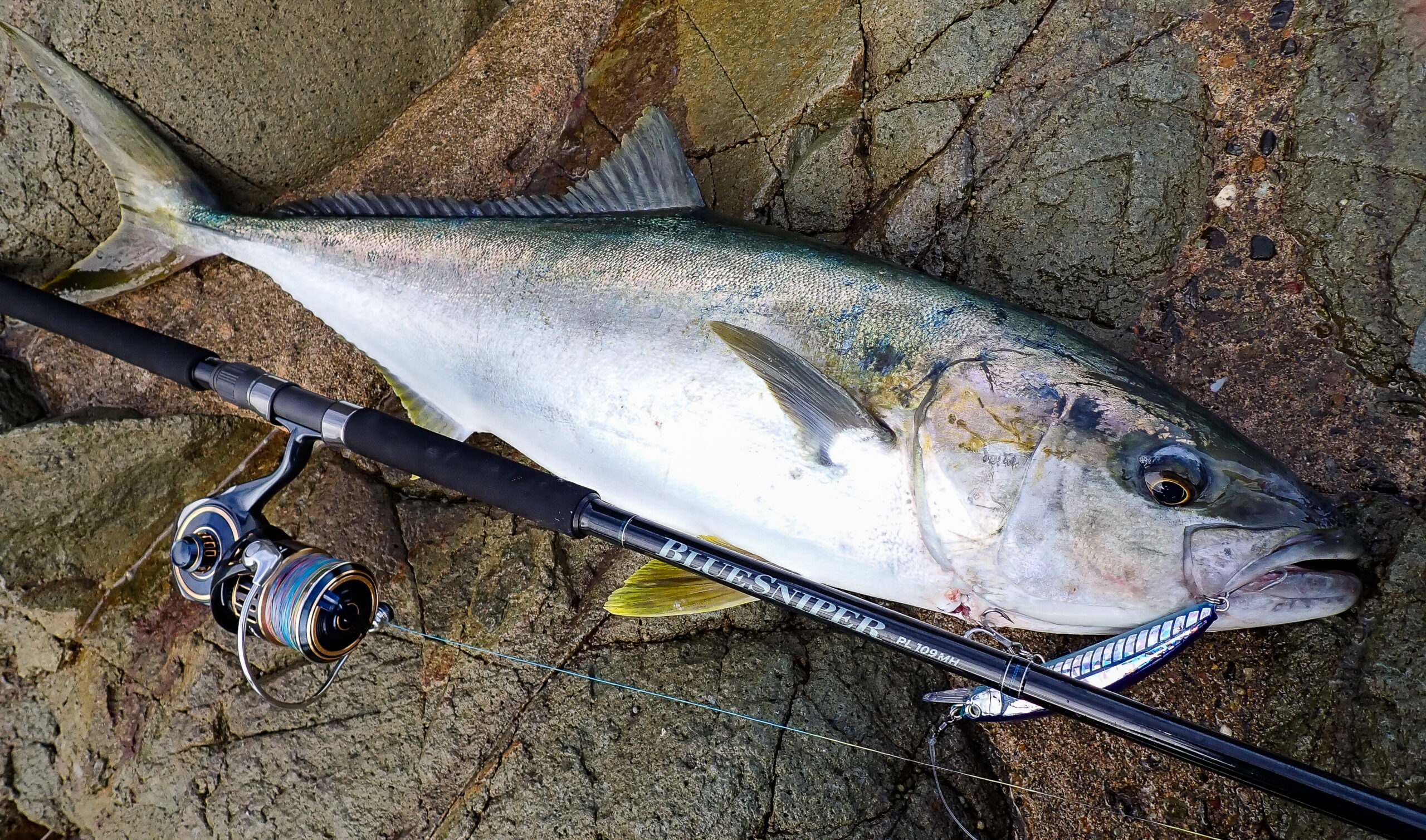
Recently, we received a report from our Field Staff member Mr.Inomata, based in Niigata, Japan, on a quality yellowtail kingfish landed with the BlueSniper PL109MH.
After speaking with him in more detail, it became clear that simply choosing a more powerful rod was not what made the difference.
His comments reminded me of my own struggle this spring with pelagic species feeding on micro bait.
CONTENTS
02|A powerful rod is not always the answer
03|Three things Mr.Inomata focuses on when targeting pelagic species from shore
04|Choosing the right BlueSniper model
05|PL109MH for shore-based longtail tuna in Australia
06|Performance that lets you keep casting
07|TACKLE DATA
When the lure you want to use won’t reach the fish
This spring, I once again struggled with pelagic species feeding on tiny baitfish from the rocks.
The fish were there.
They were even boiling right in front of me.
But they would not take my lure.
The most difficult situations were sudden, single boils.
When fish are working a sustained bait ball, you can predict the direction they are moving and place your lure ahead of them.
With a single boil, however, there is no way to know where the next one will appear.
Even if you cast to the exact spot where the surface has just erupted, the fish may already have moved by the time your lure lands.
And when the fish are keyed in on tiny baitfish, naturally you want to downsize your lure.
But the smaller the lure, the harder it becomes to achieve the casting distance you need.
A larger lure can reach the fish.
A smaller lure might get the bite.
But if it cannot reach the fish, you never get a chance.
That contradiction stayed with me throughout the spring season.
A powerful rod is not always the answer
That spring, the rod I mainly used was the BlueSniper PL106H.
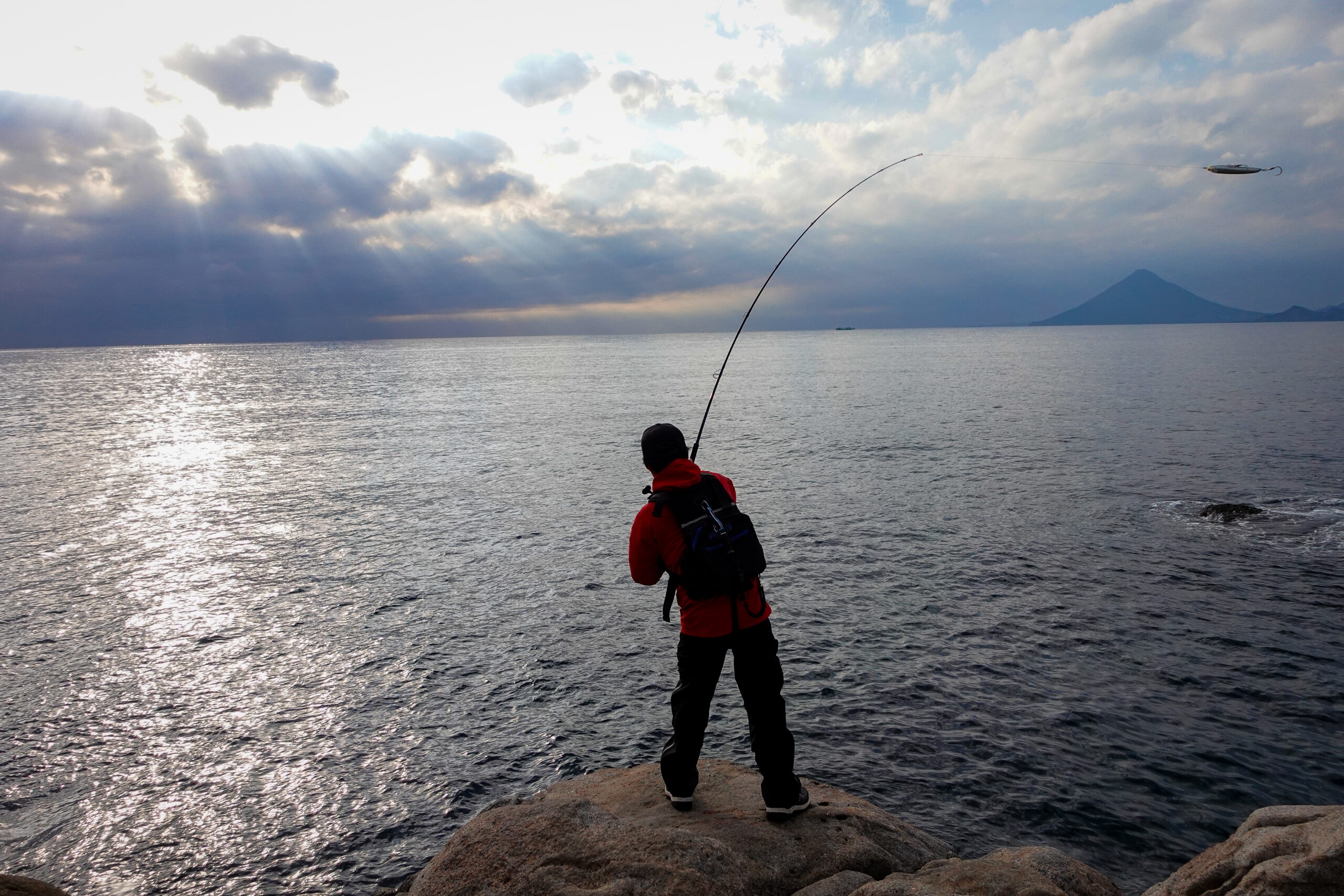
I had expected larger pelagic species and planned to build my approach around relatively large plugs.
Use heavier line and cast large plugs with confidence.
Then, once a fish is hooked, keep steady pressure on it without giving away control of the fight.
At locations where large fish are expected, or where rough structure means the fish cannot be allowed to run freely, the power of the PL106H is a major advantage.
But that day, large plugs were not what the fish wanted.
I wanted to use a smaller lure.
But I still needed to reach the boils occurring further offshore.
TACKLE BALANCE
The ability to deliver the right lure for the fish in front of you to the exact place it needs to be.
What I needed was not simply more power. It was the right overall tackle balance.
That made me take another look at the BlueSniper PL109MH.
Three things Mr.Inomata focuses on when targeting pelagic species from shore
Inomata, who landed the quality kingfish featured in this report, also does not approach modern rockshore fishing with the mindset that simply using the heaviest tackle possible is always the answer.
We asked what he has been focusing on in recent years, and three points stood out.
POINT 01
Don’t limit yourself to topwater
Few moments in rockshore kingfish fishing are more exciting than watching a big fish explode on a large topwater plug.
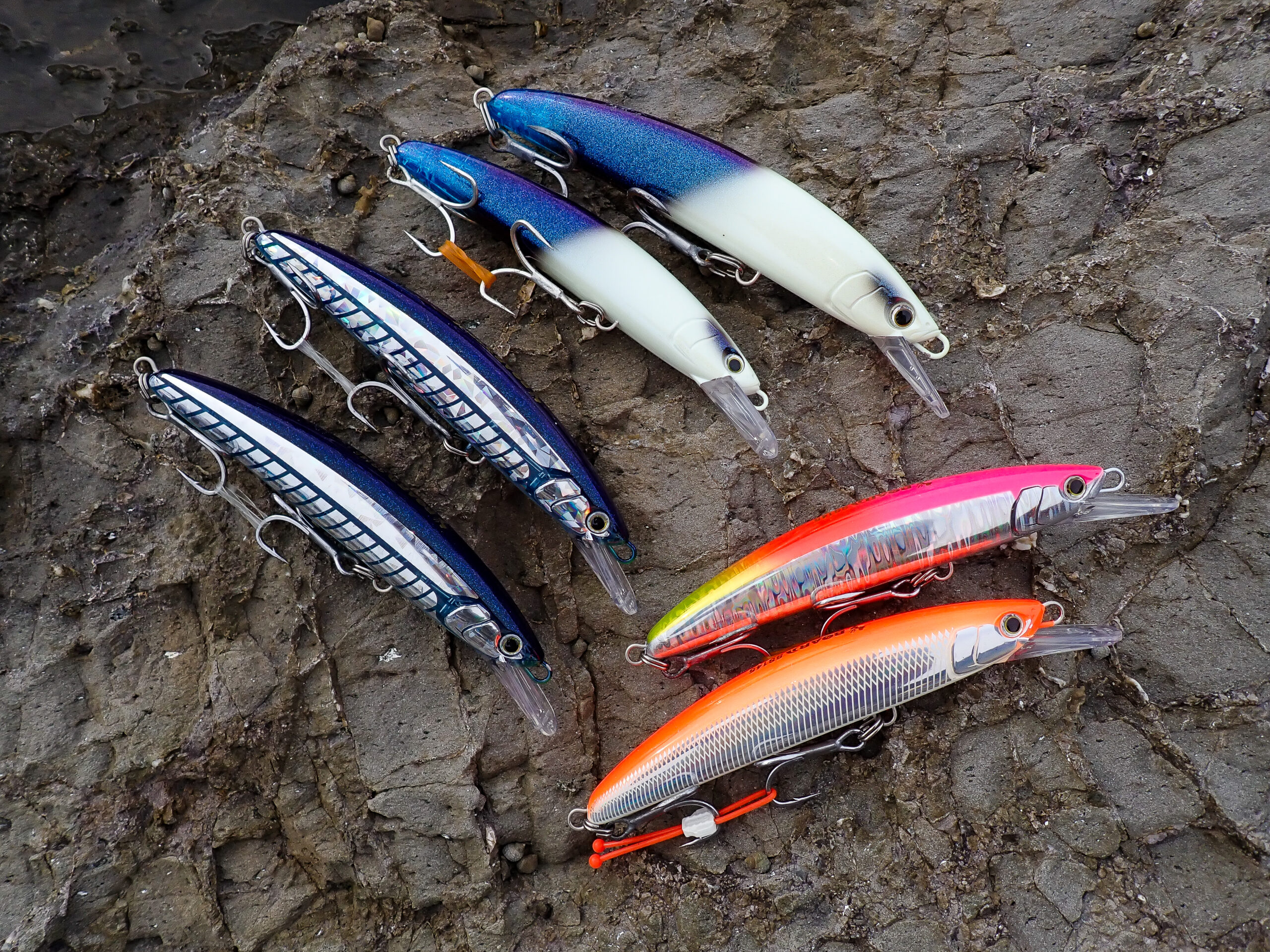
But in recent years, Mr.Inomata has found that there are more situations where subsurface lures produce better results.
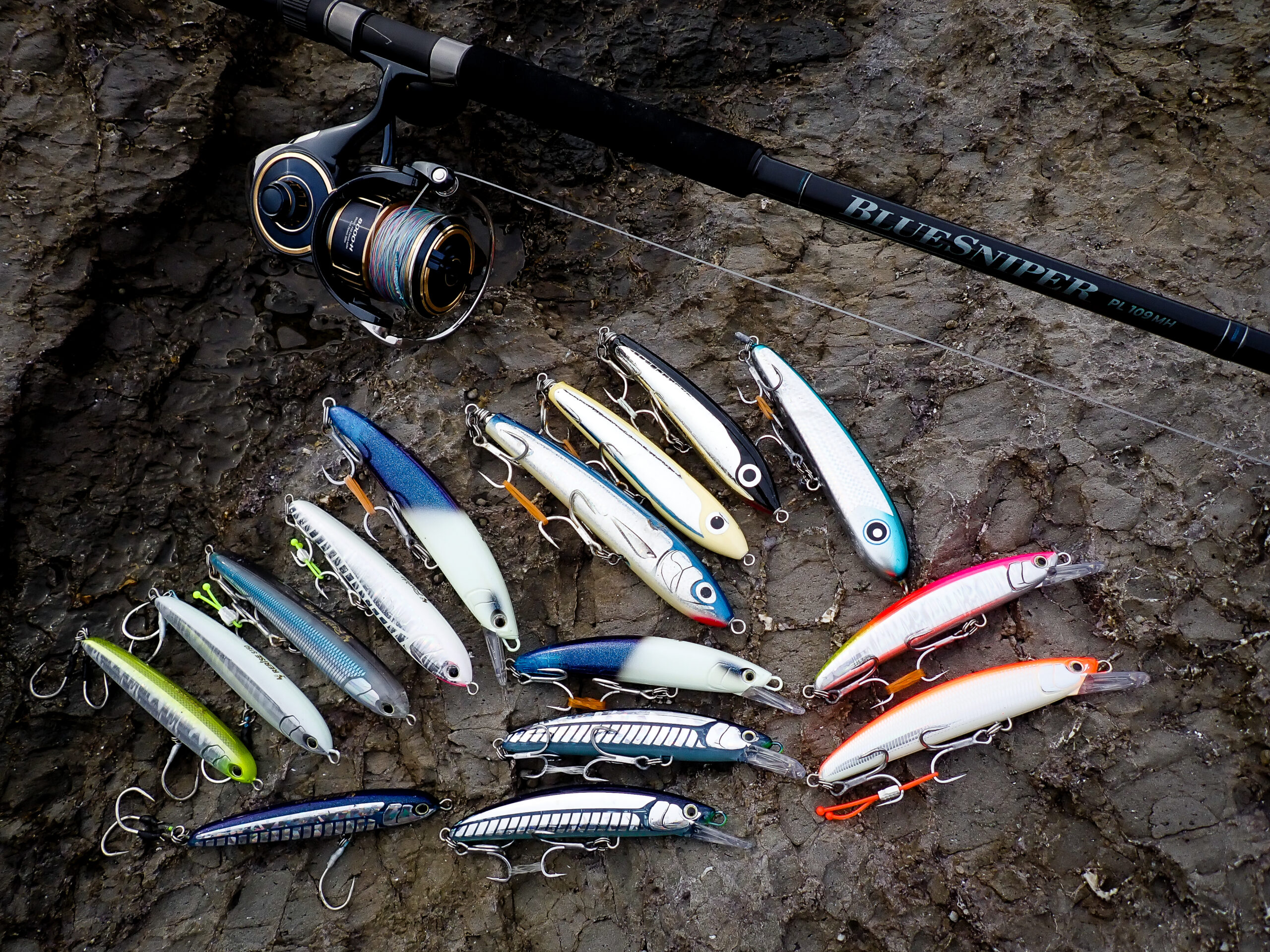
For that reason, he actively uses minnows and sinking pencils as well as topwater plugs.
Rather than deciding that “kingfish means topwater,” he focuses on presenting a lure in the range where the fish are actually willing to respond.
The fish in this report was caught on a MARIA BOAR SS145.
POINT 02
Stay flexible with your lure strategy
Bright sun, flat calm and clear water.
When these conditions come together, the bite can become much more difficult outside the low-light periods around dawn and dusk.
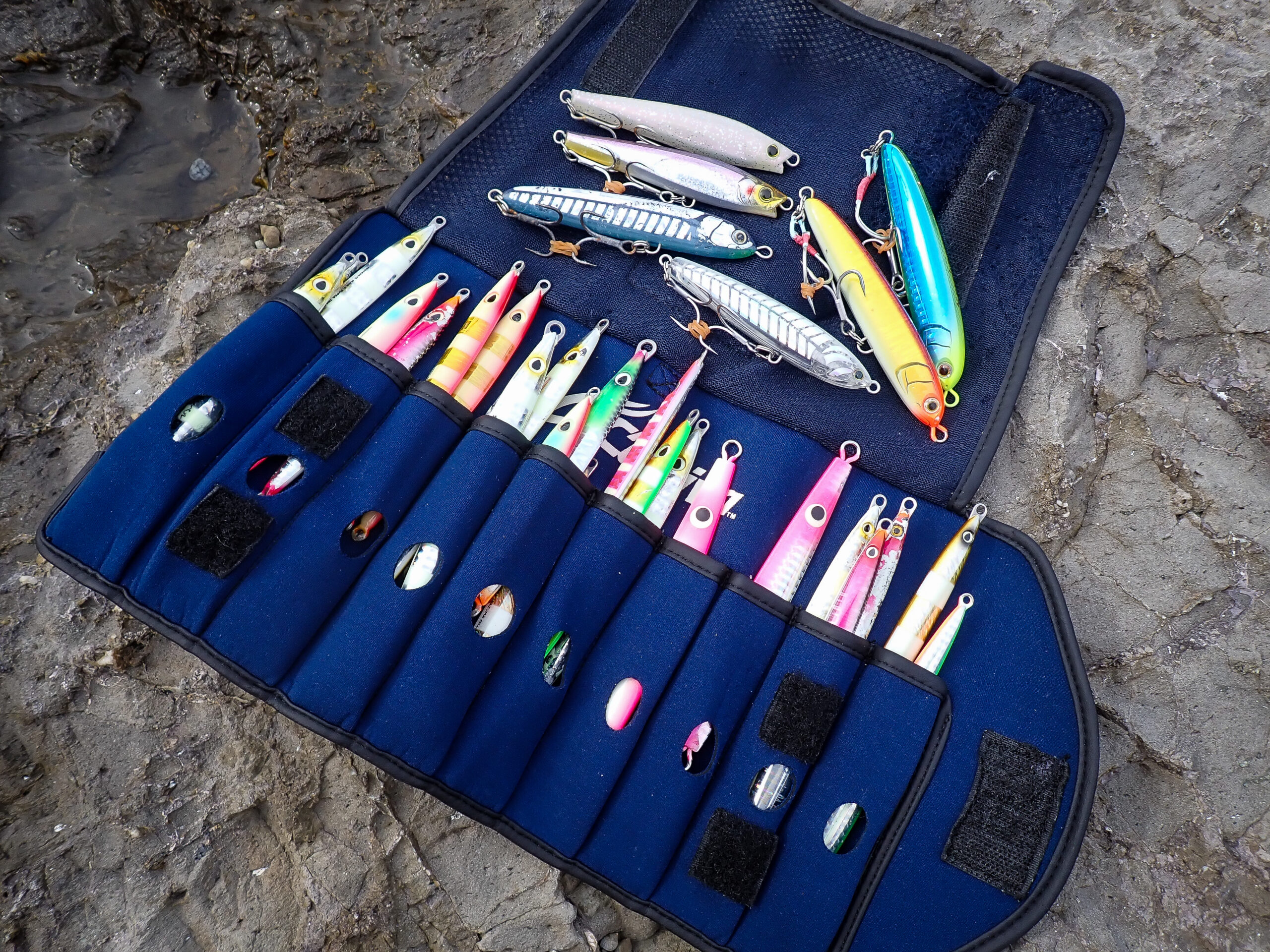
In those situations, Mr.Inomata may work the bottom with a metal jig or use the slow, drifting action of a sinking pencil, changing both lure type and depth to find a response.
Rather than sticking to the approach he started with,
he looks for the approach that will reach the fish under the conditions of that particular day.
That flexibility in lure selection is just as important when targeting large pelagic species from shore.
POINT 03
Keep the line system simple
When targeting large kingfish, it is natural to want to increase the PE line class.
But in rockshore fishing, no matter how heavy the line is, the risk of a break-off caused by rocks or rough structure can never be completely eliminated.
For that reason, Mr.Inomata does not choose his PE line class based only on the potential size of the fish. He also considers the casting distance he needs.
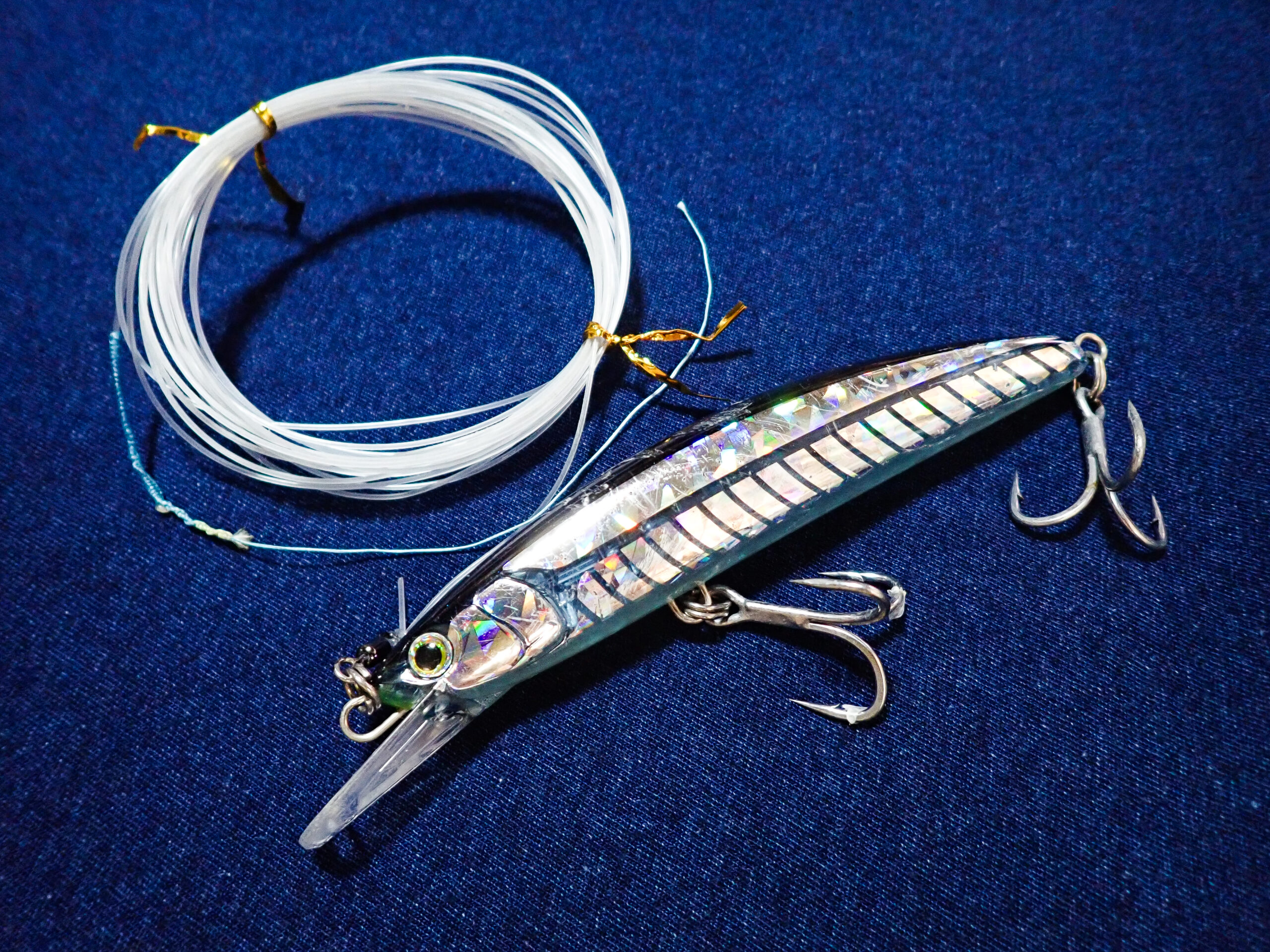
For this fish, he used PE #4.
He also does not use the heavy-line spacer systems or line-protection systems that have become more common in recent years.
FG knot + 100 lb nylon leader
Leader length: approximately three arm spans
Instead, he prefers to keep the system simple.
Adding more connections also means adding more potential points of concern during a fight.
It is a system built around Mr.Inomata’s own approach to fighting large fish with confidence.
Choosing the right BlueSniper model
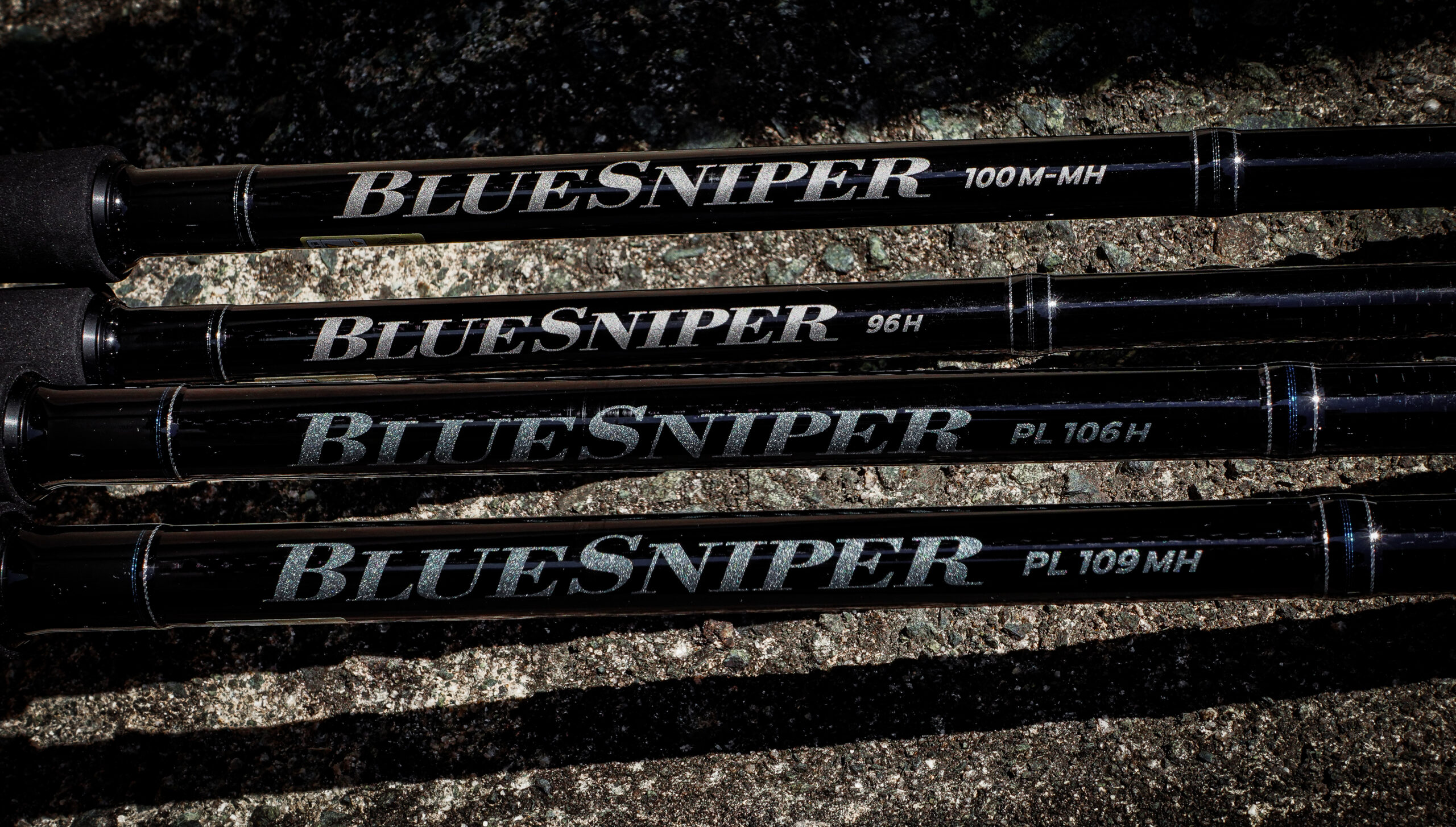
When targeting larger pelagic species from shore, each of the main BlueSniper models has a different role.
100M-MH
96H
PL109MH
PL106H
Even when targeting the same class of pelagic species, the performance you need from your rod changes depending on lure size, line class and the terrain in front of you.
PL109MH for shore-based longtail tuna in Australia
In recent years, shore-based fishing for longtail tuna has become increasingly popular along Australia’s east coast.
Depending on the conditions, longtail tuna can feed on an extremely wide range of prey — from tiny whitebait to much larger slimy mackerel and scad.
When the fish are keyed in on very small bait, shore-based anglers face exactly the same problem described earlier in this article.
You want to downsize the lure to match the bait, but you still need enough casting distance to reach fast-moving schools feeding well offshore.
LONGTAIL TUNA × PL109MH
Small-lure versatility, long-range casting performance and the power needed for hard-running pelagic species.
This is exactly the kind of situation where the BlueSniper PL109MH comes into its own.
Its casting performance and light, responsive feel make it easier to send small to medium-sized plugs a long way, while retaining the power needed to handle the strong runs of pelagic species such as longtail tuna.
And when the bait profile changes from tiny whitebait to larger mackerel or scad, the ability to change lure size and presentation without being locked into a single approach becomes just as important.
For anglers targeting longtail tuna from the shore along Australia’s east coast, the PL109MH offers a highly effective balance of casting distance, lure versatility and fighting power.
Performance that lets you keep casting
The PL109MH used by Mr.Inomata combines excellent casting distance with a light and responsive casting feel.
But these qualities are not limited to the PL109MH. They were also among the key areas we focused on when developing the current BlueSniper series.
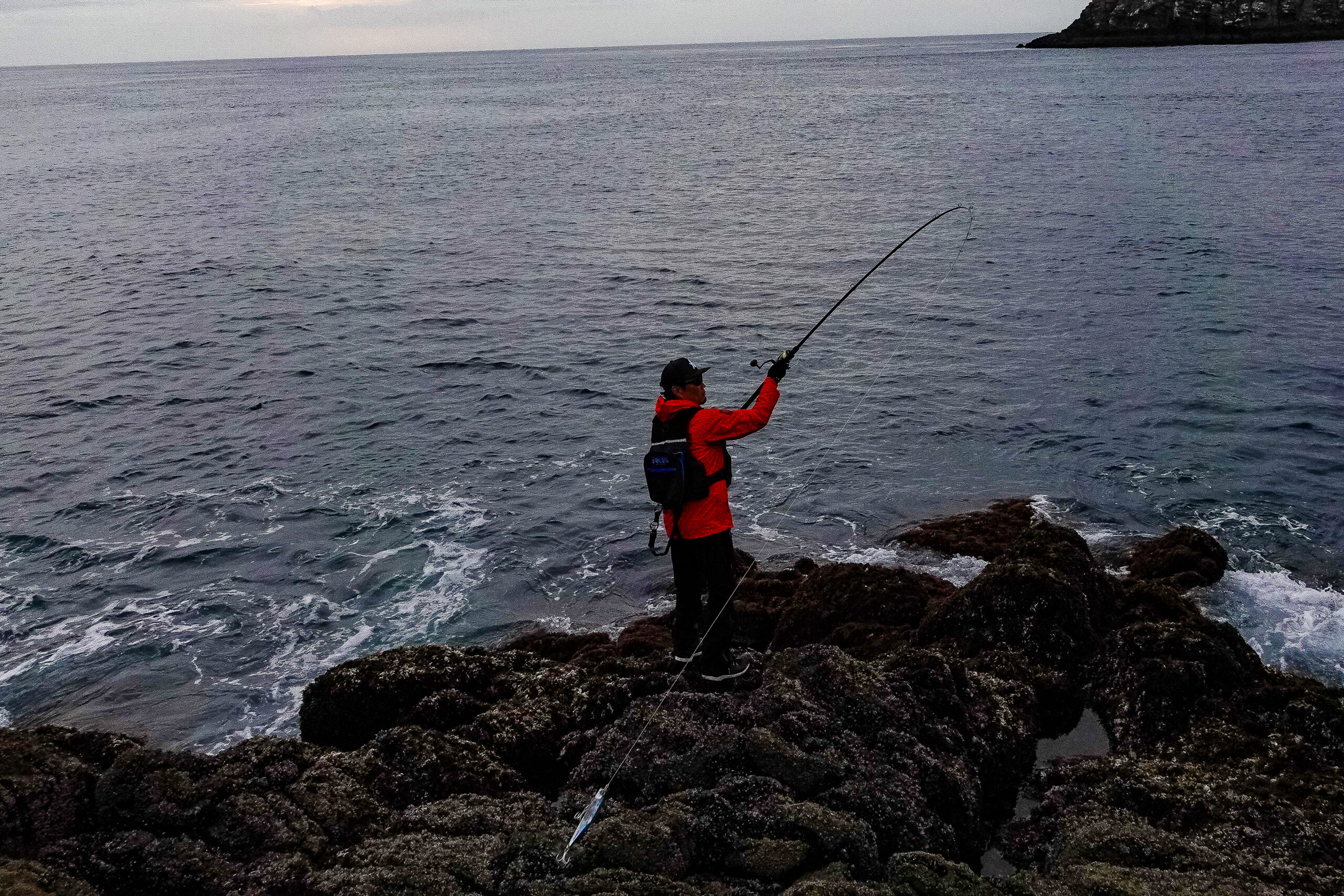
When targeting pelagic species from shore, anglers may spend an entire day casting while waiting for a brief opportunity that could come at any moment.
That is why rod power alone is not enough.
The ability to load the blank smoothly with the weight of the lure.
The ability to consistently send the lure where you want it to go.
And the ability to reduce fatigue through repeated casting, so you can still make the cast that matters when the opportunity finally appears.
“Performance to Keep You Casting”
Across the BlueSniper series, each model has its own clearly defined role and power level, but this is one area we have pursued throughout the entire lineup.
Targeting a large fish does not automatically mean choosing the most powerful rod.
And using a small lure does not automatically mean choosing a lighter rod.
Rod, reel, line and lure.
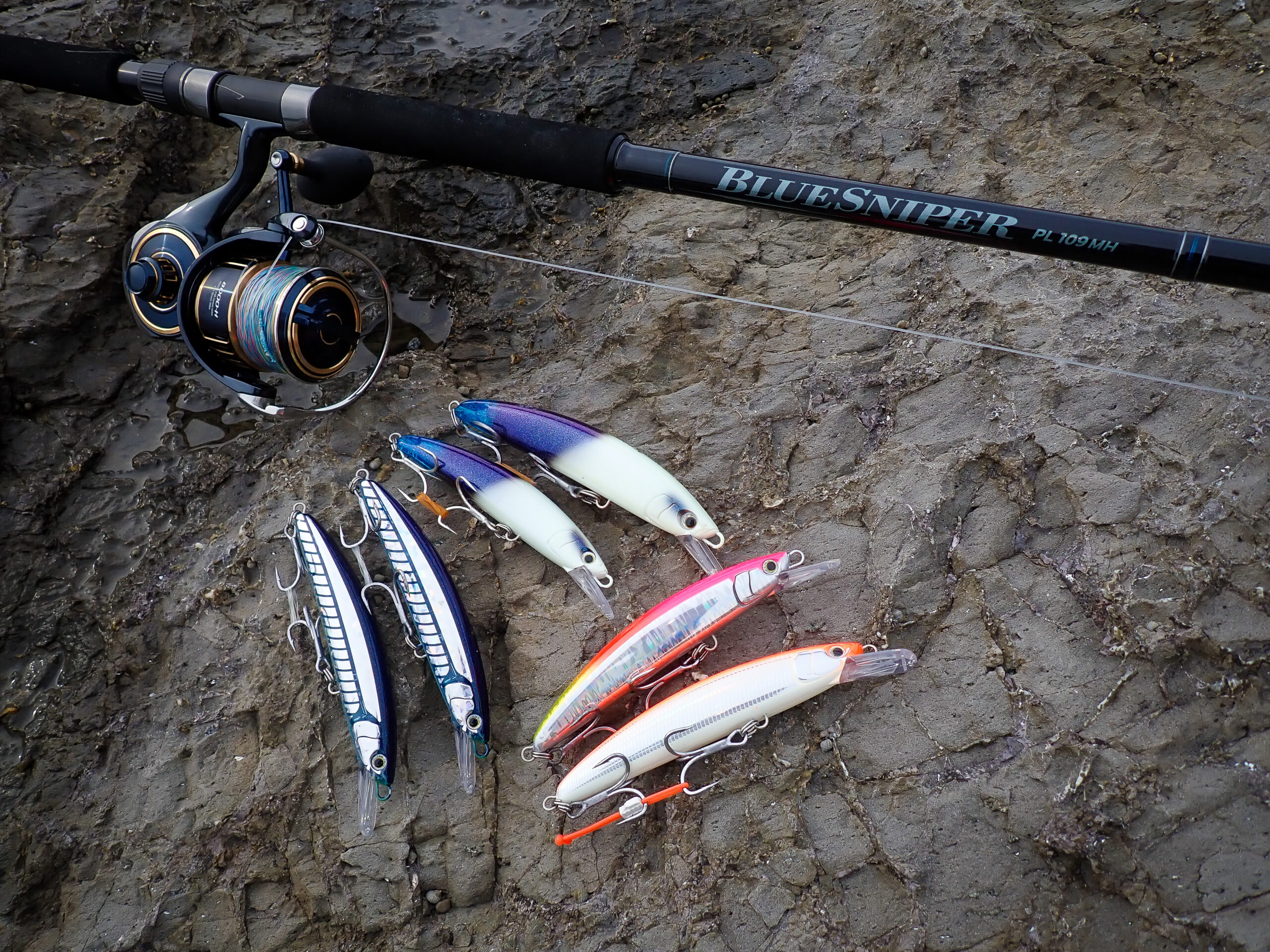
Rather than considering each component individually, the key is to build the entire tackle system around the conditions you are facing that day.
Mr.Inomata’s fish was another reminder of just how important that balance can be when targeting large pelagic species from shore.